Skip to content

RVOE 2026-039 · Online

Bachelor's Degree in Theology

Bachelor's Degree in Theology

QIIST's Bachelor's Degree in Theology (Licenciatura en Teología) prepares professionals to interpret the Bible rigorously and communicate the Christian faith in today's contexts. The curriculum combines biblical and theological study with English, artificial intelligence tools, analysis of social issues in Mexico and Latin America, research and a final professional internship. It is studied online over nine four-month terms and is designed for people who already serve in their church or community.

Key facts

The program at a glance

Studies with Official Recognition of Studies (RVOE) under Agreement No. 2026-039, dated May 22, 2026, granted by the Querétaro State Ministry of Education (Secretaría de Educación del Poder Ejecutivo del Estado de Querétaro).

Curriculum code: LUNV248260.

Apply for admission

Modality
non-classroom, online option.
Length
9 four-month terms (3 years).
Credits
305.
Hours
4,880 in total: 976 under faculty guidance and 3,904 of independent work.
Curriculum design
fixed; all courses are required and are taken as a block each term.
Start
first term CT2027-2, May 3 to August 22, 2027.

Why study Theology at QIIST?

Why study Theology at QIIST?

01 · Biblical Theology

Leadership grounded in the Word

The Word of God is the starting point and the center of theological formation at QIIST. To form Christian leaders firmly rooted in Scripture, you will study the Old and New Testaments along two structured paths: from general introductions to the Pentateuch, the prophets and wisdom literature, and from the Gospels and Acts to the epistles and Revelation. On that biblical foundation you will study systematic theology, hermeneutics and church history.

02 · Artificial Intelligence

Leadership for the age of AI

Artificial intelligence is transforming human civilization. QIIST does not form commentators who know this change only through books and media, but leaders who can experience it firsthand, put it to work, anticipate where it is heading and teach it to others.

Across six courses you will learn to understand AI and assess it with critical judgment, to collaborate with it and create responsibly, to make ethical decisions grounded in data and evidence, and to automate tasks and design AI agents. Technology is a powerful tool for biblical study, research and ministry; theological discernment, however, always remains human.

03 · English and Mission

Leadership that takes the Gospel to the ends of the earth

To a genuine passion for taking the Gospel to the ends of the earth, we add a powerful tool: a language for speaking with the world. From the first to the eighth term you will take an English course: three in practical English, one in grammar, two in academic writing and two in ministerial and theological English.

The goal is for you to read theological literature in English and communicate confidently in international settings. Program classes are taught in Spanish.

04 · Border Issues

Leadership that transforms reality

Faith does not stay within the walls of the church. We form leaders who care about the real problems of society and exert concrete influence to change them.

Three “Border Issues” courses address human rights and a culture of peace; gender, inequality and social movements; and migration and poverty. Together with Mexican History and Culture and Intercultural Communication, they build your ability to read Mexican and Latin American reality through the lens of faith, and to respond to it.

05 · Field Practice

Leadership that experiences grace in the field

Theological formation at QIIST does not stop at theoretical knowledge. We form hands-on leaders who, serving in pastoral and missionary ministry, experience the power and grace of God.

That is why the ninth term is devoted entirely to a professional internship in a dual training format. You work in a real ministry setting – preaching, teaching, counseling, administration or community work – while documenting and analyzing your experience with academic support on the platform.

06 · Online Learning

Study without leaving your ministry

The program was designed from the start for online education. Live sessions are scheduled at times that suit working people, and they are recorded and made available, so you can keep serving in your church or community while you study.

Program objective

Program objective

Preparing interpreters of the faith

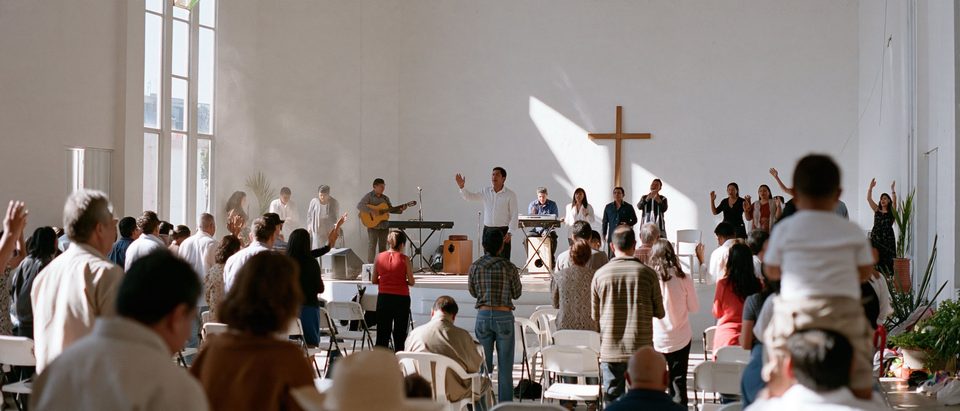
The program aims to prepare professionals who can understand, interpret and communicate the Christian faith in depth in a world of rapid social, digital and cultural change. To do so, it balances rigorous study of the Scriptures with participation in real settings of service, pastoral leadership and community action.


Admission profile

Admission profile

01

Knowledge

Familiarity with the Bible and with core Christian doctrines, gained through church life, and active participation in an evangelical Christian church. Full command of Spanish, middle school–level mathematics and basic computer skills.

Intermediate English is recommended but not required for admission.

02

Skills

Basic critical thinking, reading long texts and clear writing in Spanish, willingness to work in teams and, above all, self-management: organizing your week between study, work, ministry and family, and studying without direct supervision. You will also be asked to learn to use new digital platforms.

03

Attitudes and values

Personal commitment to the evangelical Christian faith, openness to rigorous examination of ideas, respect for those who think differently, academic integrity and a calling to serve the church and society. They can come through in an optional personal interview.


Admission to Theology

The general documents are all you need for admission. Church information, the pastoral recommendation letter, the essay and a personal interview with the Admissions Office are optional: they are not admission requirements, but the letter lets you apply for the Partner Companies or Churches scholarship.

Optional items

None of them is an admission requirement. Documents are submitted with your online application; if you would like an interview, the Admissions Office schedules it once it has reviewed your file.

  1. Optional: personal video-call interview with the Admissions Office.
  2. Optional: pastoral recommendation letter, signed and recently dated (for the Partner Companies or Churches scholarship).
  3. Optional: essay in PDF, 600 to 1,000 words, about your background, your calling and why you want to study Theology.

Go to the admission application

General documents

  • Birth certificate
  • Officially recognized high school diploma (certificado de bachillerato)
  • CURP (or valid passport)
  • Valid official photo ID
  • Digital photo, 4:6 format

Applications are open all year. With your admission notice, the Admissions Office tells you the earliest term in which you can start.

See the admission process


Graduate profile

Graduate profile

Specialized biblical and theological knowledge

You will interpret the Scriptures from a critical and contextual perspective, with a command of the Old and New Testaments and current exegetical methods. You will know the major themes of systematic theology, the history of Christianity and its development in Mexico and Latin America, and you will be able to apply digital tools, including artificial intelligence, to biblical research.

Skills for ministry

You will be able to preach in person and online, design biblical teaching processes, provide pastoral counseling and manage church organizations. You will know how to plan evangelism and community action strategies in response to issues such as inequality, violence and migration, and you will use digital tools to produce content and support online communities.

Four areas of professional emphasis

You will develop skills in four areas:

  • Pastoral ministry and church leadership
  • Theological teaching and research
  • Evangelism, missiology and digital ministry
  • Public theology, social action and justice

These are not formal specializations, but areas of emphasis within a single curriculum that broaden your career opportunities.

Understanding the social context

You will analyze Mexican and Latin American realities – poverty, migration, violence, inequality – using theological criteria. You will lead with transparency and with safeguards against the abuse of power, foster inclusive faith communities and engage respectfully with other religious traditions, with knowledge of Mexico's legal framework on religious freedom and the secular state.

Cross-cutting professional skills

You will communicate theological ideas clearly – orally, in writing and digitally – in Spanish and English. You will be able to coordinate ministry teams and projects, plan budgets and evaluate pastoral, educational and social initiatives.

The experience of studying online strengthens your self-discipline and your ability to work in virtual, multicultural teams.


Curriculum

Each course in terms 1 to 8 is worth 5 credits: 16 hours under faculty guidance and 64 hours of independent work. All courses are required and online.

  1. First term

    7 courses, 35 credits

    • Practical English I
    • Human Rights, Violence and Culture of Peace
    • Advanced Spanish Grammar for Academic Contexts
    • AI Literacy and Critical Judgment
    • Human-AI Collaboration and Responsible Creation
    • Introduction to the Old Testament I (Historical Books and Pentateuch)
    • Introduction to the New Testament I (Gospels and Acts)
  2. Second term

    7 courses, 35 credits

    • Practical English II
    • Gender, Inequality and Social Movements
    • Oral Communication and Academic Presentations
    • Data, Evidence and AI-Assisted Interpretation
    • Computational Thinking and Accessible Automation
    • Introduction to the Old Testament II (Prophets and Wisdom Literature)
    • Introduction to the New Testament II (Epistles and Revelation)
  3. Third term

    7 courses, 35 credits

    • Practical English III
    • Migration, Poverty and Global Challenges
    • Mexican History and Culture
    • AI-Assisted Decision-Making, Ethics and Governance
    • AI Agents and Workflow Design
    • The Pentateuch I (Genesis and Exodus)
    • General Epistles
  4. Fourth term

    7 courses, 35 credits

    • English Grammar
    • Research Methodology
    • Academic Writing I: Foundations of Argumentative Writing
    • Intercultural Communication
    • Systematic Theology I
    • The Pentateuch II (Leviticus, Numbers, Deuteronomy)
    • Synoptic Gospels
  5. Fifth term

    7 courses, 35 credits

    • Basic Academic Writing in English
    • Research Seminar I
    • Academic Writing II: Research and Disciplinary Writing
    • Leadership and Public Speaking
    • Systematic Theology II
    • Prophets I (Major Prophets)
    • Pauline Epistles I (Theological Epistles)
  6. Sixth term

    7 courses, 35 credits

    • Advanced Academic Writing in English
    • Research Seminar II
    • Church History
    • Christian Apologetics
    • Hermeneutics
    • Prophets II (Minor Prophets)
    • Pauline Epistles II (Pastoral Epistles)
  7. Seventh term

    6 courses, 30 credits

    • Ministerial and Theological English I
    • Introduction to Pastoral Ministry
    • Introduction to Evangelism and Missiology
    • Comparative Religions I (Abrahamic Religions: Christianity, Judaism, Islam)
    • Christian Education
    • Wisdom Literature
  8. Eighth term

    6 courses, 30 credits

    • Ministerial and Theological English II
    • Christian Worship
    • Inner Healing
    • Comparative Religions II (Eastern Religions: Buddhism, Hinduism, Taoism)
    • Christian Ethics
    • Church Administration and IT
  9. Ninth term

    1 module, 35 credits

    • Professional Internship through a Dual Training Program (112 hours with faculty, 448 independent)

Curriculum areas

The 55 courses and modules in the curriculum are organized into eight areas.

English (8)
  • Practical English I, II and III
  • English Grammar
  • Basic Academic Writing in English
  • Advanced Academic Writing in English
  • Ministerial and Theological English I and II
Language & Mexican Culture (5)
  • Advanced Spanish Grammar for Academic Contexts
  • Oral Communication and Academic Presentations
  • Mexican History and Culture
  • Academic Writing I
  • Academic Writing II
Research (3)
  • Research Methodology
  • Research Seminar I and II
Border Issues (3)
  • Human Rights, Violence and Culture of Peace
  • Gender, Inequality and Social Movements
  • Migration, Poverty and Global Challenges
Artificial Intelligence (6)
  • AI Literacy and Critical Judgment
  • Human-AI Collaboration and Responsible Creation
  • Data, Evidence and AI-Assisted Interpretation
  • Computational Thinking and Accessible Automation
  • AI-Assisted Decision-Making, Ethics and Governance
  • AI Agents and Workflow Design
Major – Biblical Theology (16)
  • Introduction to the Old Testament I and II
  • Introduction to the New Testament I and II
  • The Pentateuch I and II
  • General Epistles
  • Synoptic Gospels
  • Systematic Theology I and II
  • Prophets I and II
  • Pauline Epistles I and II
  • Hermeneutics
  • Wisdom Literature
Major – Ministry & Evangelism (13)
  • Intercultural Communication
  • Leadership and Public Speaking
  • Church History
  • Christian Apologetics
  • Introduction to Pastoral Ministry
  • Introduction to Evangelism and Missiology
  • Comparative Religions I and II
  • Christian Education
  • Christian Worship
  • Inner Healing
  • Christian Ethics
  • Church Administration and IT
Major – Dual Training (1)
  • Professional Internship through a Dual Training Program

Preparatory course

What it is

It is required preparation for admitted students: 40 hours of independent online study that you can complete from the date of your admission application until before your first term starts. It helps you strengthen your academic skills, learn to use the QIIST platform, get to know university culture and arrive ready for your first term.

It does not carry curriculum credits.

Five modules

The modules are: 1) Welcome and institutional integration; 2) Core academic skills; 3) Digital literacy and online learning; 4) Theological university culture; and 5) Integration and preparation for the start of classes, which ends with a capstone project and a personal plan for your first term.


Course exemptions: prior Theology studies and English certificates

So that you do not repeat what you have already studied, you can be exempted from the corresponding courses if you studied Theology or hold an official English certificate (article 20 BIS of the School Regulations). Exempted credits, together with credits recognized by equivalency, may not exceed 50% of the curriculum's credits.

If you have already studied Theology

If you studied Theology at an institution in Mexico (with or without RVOE) or abroad (whether or not it is a formal university), you can be exempted from the equivalent QIIST courses through this procedure.

  1. Complete the preparatory course.
  2. Take QIIST's credit exam for each course you want to be exempted from; you may take it only once per course, and it is not available for courses you have already registered for or taken at QIIST, even if you did not pass them. The passing score is 7 or higher on a 10-point scale.
  3. You are exempted from taking the courses you pass, and the exam score is recorded as your grade for the course and counts toward your average. If you do not pass, you lose no opportunities to pass the course: you simply take it as usual.

The amount of the exam fee is published on this site before each term begins and is non-refundable once you have taken the exam.

If you hold an official English certificate

With the certificate of an official English exam, you can be exempted from English courses according to your level. It is accepted regardless of its date, as long as QIIST can verify its authenticity; if its age makes that impossible, it is not accepted, and we recommend retaking the exam and submitting the new certificate.

In addition, exempted courses are recorded with a grade of 10.

CEFRIELTSTOEFL iBTCambridgeExempted coursesExemption fee
C28.5 or higher114 or higherCPE (200 or higher)All English courses (8)Published before each term
C17.0 or higher95 or higherCAE (180 or higher)All English courses (8)Published before each term
B25.5 or higher72 or higherFCE (160 or higher)Basic and intermediate English (5)Published before each term
B14.0 or higher42 or higherPET (140 or higher)Basic English (3)Published before each term
A23.0 or higherBelow 42KET (120 or higher)Not applicable—
A12.0 or higherBelow 42Below 120Not applicable—

Basic English: Practical English I, II and III. Intermediate English: English Grammar and Basic Academic Writing in English. All English courses also include Advanced Academic Writing in English and Ministerial and Theological English I and II. Once the exemption is approved, the fee is non-refundable.


How you will learn

How you will learn

01

Online, at your own weekly pace

All classes, assignments, assessments and tutoring take place on the QIIST platform. Each week your instructor releases materials and activities, and you organize your time.

Live sessions on QIIST AI Campus are usually weekly, in the evening or on weekends, and they are recorded.

02

A full-time workload

Each course takes about five hours a week (one with faculty and four of independent work). With seven courses, the workload is around 35 hours a week in terms 1 to 6, and 30 hours in the seventh and eighth terms.

Each term lasts 16 weeks.

03

Close support

From the moment you are admitted, you will have an academic advisor, with no more than 30 students per advisor, as well as specialized tutoring, a 24/7 AI tutor, technical support, ministerial mentoring and pastoral care. The platform detects signs that you may be falling behind so it can offer support in time.

04

Continuous, authentic assessment

Assessment combines forum participation, open-book exams, essays and exegetical analyses, and applied projects such as recorded sermons or lesson plans. Grades are on a scale of 0 to 10, and the minimum passing grade is 7.0.

Work is reviewed under strict academic integrity standards.


Career opportunities

Career opportunities

Pastoral ministry and church leadership

You can serve as a senior or associate pastor, or lead ministries in a local church, with responsibilities in preaching, teaching, counseling and community management. The market study identifies this as the field with the largest number of positions and notes that many denominations prefer candidates with officially recognized training.

Teaching and theological education

You can teach theology and ethics courses, design ministry training programs or coordinate academic areas in seminaries, Bible institutes and online education platforms. The market study points to a growing need for instructors skilled in digital tools.

Evangelism, missions and digital media

You can design evangelism strategies, take part in intercultural missions or produce content for Christian media and social networks. The market study describes digital ministry as an emerging field that grew after the pandemic, with roles such as media coordination and livestream production.

Chaplaincy and pastoral counseling

You can support people in crisis as a pastoral counselor in churches and community organizations, or as a chaplain in hospitals, correctional facilities, universities and companies, in line with each institution's own requirements.

Social action and public dialogue

You can coordinate social justice and peacebuilding programs in churches and civil society organizations, facilitate reconciliation processes or advise on interreligious dialogue. The market study lists community development NGOs and social ministry among the areas with steady demand.

Managing religious organizations

With training in church administration and information technology, you can manage churches, coordinate ministries or take on responsibilities within denominational structures. The market study describes these positions as fewer in number and requiring a high level of theological and organizational preparation.


Internship and graduation

Internship and graduation
Professional internship in dual training

The ninth term is a single 35-credit course. You work at a ministry internship site with a supervisor and, at the same time, on the platform with a faculty advisor: you document, reflect and submit evidence of your work.

It totals 560 hours: 112 with faculty and 448 of independent work. You can only take it after passing all eight previous terms.

How the internship is assessed

The final assessment combines your performance in the field (40%), a professional ministry portfolio (40%) and a final integrative presentation (20%). The portfolio brings together logs, case reports and reflections on your ministerial identity and responsibility.

Capstone project and thesis

The research seminars guide you in designing and carrying out an original project with a director and an academic committee. The project can take the form of a thesis, a pastoral intervention project or a publishable article, and it is evaluated by a committee of specialists.

Degree and professional license

QIIST handles the registration of the curriculum with the Dirección General de Profesiones (DGP, Mexico's General Directorate of Professions), a requirement for issuing professional licenses (cédulas profesionales), as well as degree conferral and the authentication of degrees in accordance with the law. Graduation options are governed by the School Regulations.

Read the School Regulations


After graduation: building together

QIIST does not hold a grand graduation ceremony: we would rather invest in what comes next. This institutional program is voluntary and open to students from every degree program.

After graduation: building together

01

Interdisciplinary teams

At least one year before graduating, students from different degree programs, Theology included, form teams to conceive, plan and launch their own venture.

02

Support from QIIST E&E

QIIST E&E, S.A. de C.V., QIIST's business-outreach company, supports the teams with legal, accounting, administrative, tax and investment advice. It also helps graduates find employment and may invest in projects or connect them with investors.

03

First anniversary: Venture Competition

One year after graduating, the cohort meets again. Teams present their ventures and a jury evaluates their results and social impact.

The best-rated teams may receive awards and prizes and be connected with investors; the conditions are set for each edition.

04

Theology: World Missions Congress

Theology graduates celebrate their first anniversary at the World Missions Congress: lectures and sermons by invited scholars, pastors and missionaries, ministry reports from the graduates, and time to present projects and requests for collaboration. Those who wish may also take part in the Venture Competition.

Back to home

Everything starts with a question.

Type your question and press Enter: the QIIST AI Assistant answers from QIIST's official documents.